


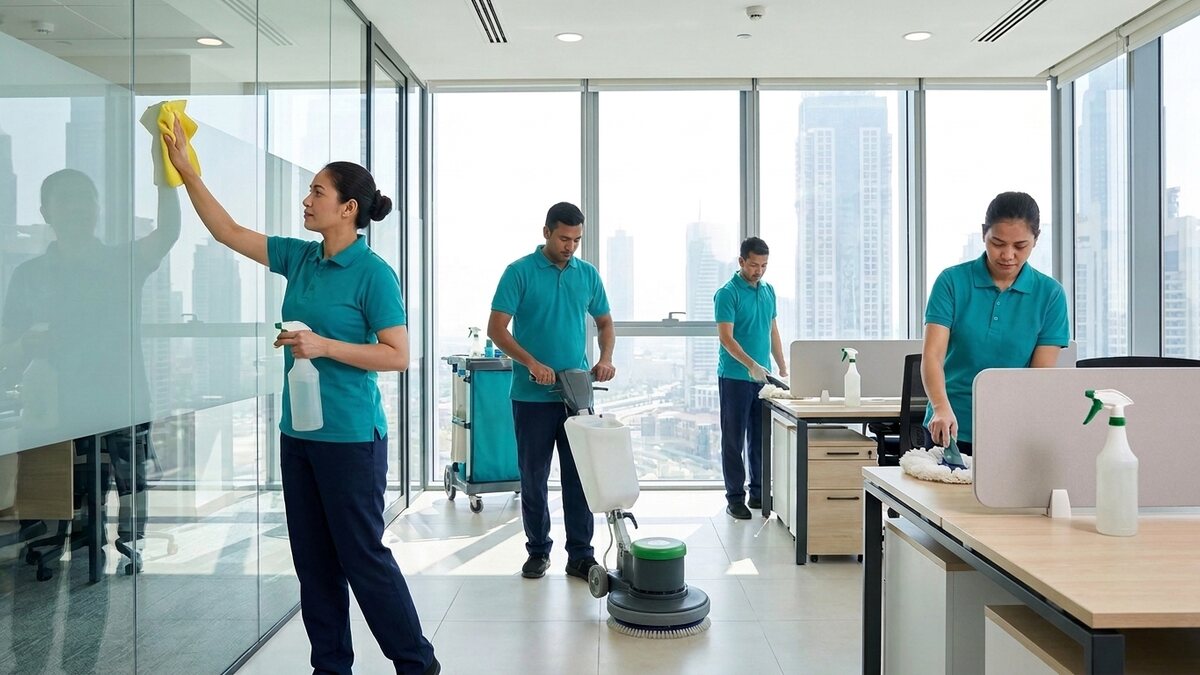
The way a business manages commercial cleaning services Dubai affects safety, continuity, service quality and the experience of everyone who enters a property. For organisations that want dependable results, commercial cleaning services Dubai should be approached as an operating system rather than a one-time purchase. A clean workplace supports presentation, comfort, asset care and reliable daily operations. In Dubai, dust, high footfall and air-conditioned interiors make frequency, method and inspection standards especially important. This guide focuses on buyer guide and gives property owners, facilities teams and decision-makers a structured way to move from a broad requirement to a workable plan.
Implementation should follow current local requirements and the property’s approved procedures. Seek competent advice wherever licensing, engineering or life safety is involved.
Why this topic deserves a site-specific plan
Operational detail determines whether the plan works at this particular property. The final arrangement should mirror real journeys, working hours, sensitive areas and communication paths rather than assumptions made from a desk.
In practical terms, begin by writing a short outcome statement: what should be protected or improved, who owns the decision, what evidence will demonstrate success, and what must happen when the normal process fails. This keeps discussions about commercial cleaning services Dubai focused on results instead of isolated features.
Key risks and planning questions
A useful review should consider at least the following exposure points:
- Wet floors and equipment creating safety hazards: Clarify when it could occur, who should notice it, the first response and the record needed for follow-up.
- Hidden areas accumulating dust and debris: Clarify when it could occur, who should notice it, the first response and the record needed for follow-up.
- Quality varying between shifts: Clarify when it could occur, who should notice it, the first response and the record needed for follow-up.
- Complaints closed without checking the root cause: Clarify when it could occur, who should notice it, the first response and the record needed for follow-up.
- High-touch points missed between general cleans: Clarify when it could occur, who should notice it, the first response and the record needed for follow-up.
- Chemicals used on incompatible surfaces: Clarify when it could occur, who should notice it, the first response and the record needed for follow-up.
Risk increases when several ordinary weaknesses overlap. Compare the points against busy periods, restricted areas and response capacity, then validate assumptions through observation and testing.
A practical buyer guide framework
- Zone the facility by use, traffic and hygiene priority. Collect only information that supports a decision, proof of delivery or later learning. Unused fields make records slower and less reliable.
- Define task frequencies instead of relying on broad descriptions. Invite every team that supplies information or receives the outcome. Cross-functional review identifies gaps that one department cannot see alone.
- Match products and tools to each material. Record when the plan expires and what operational changes reopen the decision. This keeps the control aligned with the property.
- Schedule disruptive tasks outside peak activity. Map today’s process before redesigning it. Frontline staff and service users can reveal delays and workarounds that the procedure does not show.
- Use colour-coded tools and safe chemical controls. Name who acts, how often and what evidence remains. This converts an intention into a control that managers can check.
- Set inspection points and objective acceptance criteria. Test the method in both routine and pressured conditions. Peak activity or reduced staffing often exposes delays hidden during a quiet walkthrough.
- Track consumables and recurring defects. Tell staff what to do when the standard step cannot continue. The instruction should name the escalation contact and the limits of frontline authority.
Implementation details that improve reliability
Define roles before selecting tools
Responsibility should follow the complete lifecycle: delivery, monitoring, exception handling, correction and management acceptance.
Design for busy periods and exceptions
Study peak demand as well as quiet periods. Shift changes, deliveries, events, maintenance and reduced staffing reveal where shortcuts are most likely.
Use clear instructions and short checklists
Keep operational prompts short and action-oriented. Longer policy material can explain why, but it should not slow an urgent decision.
Supervise outcomes, not just attendance
Quality control works best when it is specific and timely. Supervisors should explain the gap, demonstrate the expected method and confirm improvement later.
Performance measures to track
Choose a small dashboard that combines completion, quality and response. Useful measures for this topic include:
- Inspection pass rate: record the baseline, desired direction and person responsible for follow-up.
- Repeat cleaning defects: record the baseline, desired direction and person responsible for follow-up.
- Complaint closure time: record the baseline, desired direction and person responsible for follow-up.
- Consumable stockouts: record the baseline, desired direction and person responsible for follow-up.
- Planned tasks completed: record the baseline, desired direction and person responsible for follow-up.
Interpret measures together. Speed can hide incomplete decisions, while high completion can hide weak quality; combine the dashboard with observations and feedback.
Common mistakes to avoid
- Choosing a provider only on headcount and price. Replace this with a documented decision, clear ownership and a review point.
- Using one schedule for every area. Replace this with a documented decision, clear ownership and a review point.
- Treating visible shine as the only quality measure. Replace this with a documented decision, clear ownership and a review point.
- Failing to protect sensitive surfaces. Replace this with a documented decision, clear ownership and a review point.
Implement urgent corrections immediately, but manage broader changes through planned stages. Each stage should have acceptance criteria and a decision to continue.
How to evaluate a service provider
Ask bidders to explain the first thirty days of commercial cleaning services Dubai: assessment, staffing or equipment, briefings, supervision and early quality reviews.
- A site-specific scope and frequency plan, supported by a practical example and a named commitment in the service plan.
- Trained cleaners and active supervision, supported by a practical example and a named commitment in the service plan.
- Safe product and equipment controls, supported by a practical example and a named commitment in the service plan.
- Transparent inspection records, supported by a practical example and a named commitment in the service plan.
- Reliable relief staffing, supported by a practical example and a named commitment in the service plan.
Request a transparent breakdown and challenge assumptions that differ between bids. Missing management time, relief staff or equipment can distort the apparent saving.
Frequently asked questions
How often should commercial cleaning services Dubai be reviewed?
Review it at planned intervals and whenever an incident, refurbishment, occupancy change, new activity, technology change or repeated quality issue alters the original assumptions. High-risk controls should be checked more frequently than stable low-risk tasks.
What should be documented for commercial cleaning services Dubai?
Keep the approved scope, responsibilities, site instructions, training or briefing records, inspection results, incident or defect records, corrective actions and management decisions. Documentation should support action and learning rather than exist only for filing.
How can a business control cost without reducing quality?
Prioritise the highest risks and service outcomes, remove duplicated activity, schedule work around real demand, use technology where it improves decisions, and measure recurring defects. A clear scope reduces contingency pricing and prevents uncontrolled additions.
Who should own the plan?
A named manager should own the outcome, while operational supervisors manage daily delivery. Departments affected by the process should contribute to design and review so that handovers and dependencies are not overlooked.
Next steps
Commercial Cleaning Services in Dubai: A Buyer’s Guide is most effective when it becomes part of routine management rather than a one-off exercise. Start with the operating outcome, observe the site, assign owners, test the process and use evidence to improve it. For support with planning and service delivery in Dubai, explore Ocean Growth Security services or contact the team for a site-specific discussion.