


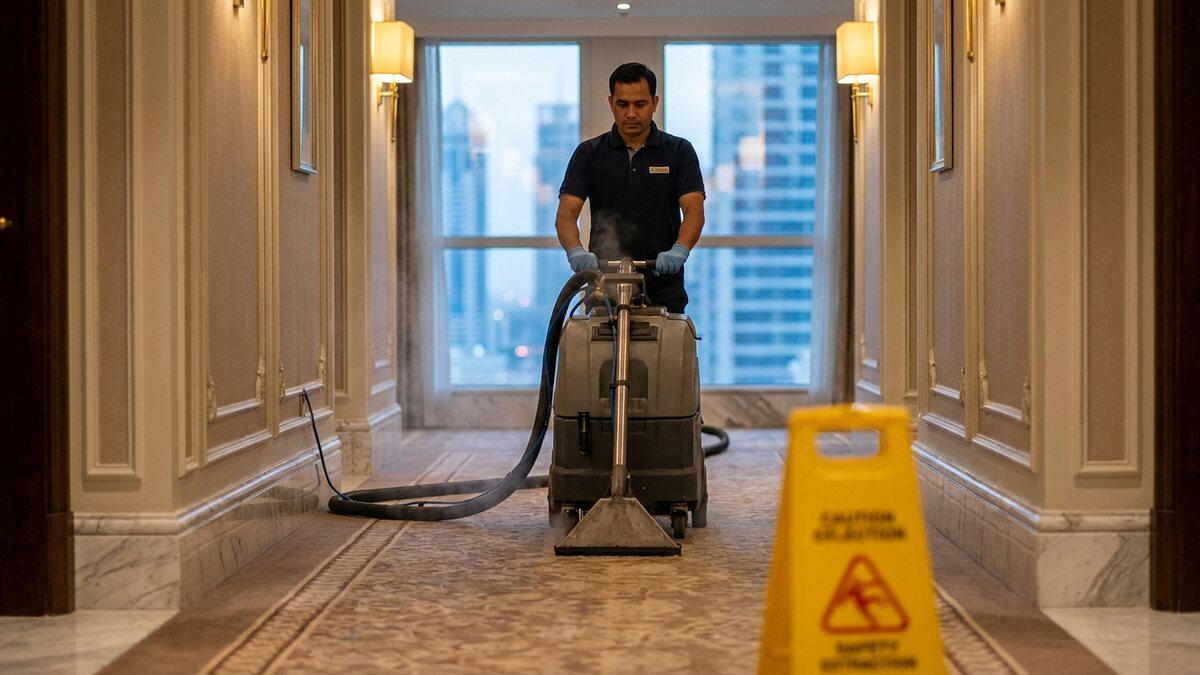
The way a business manages prepare for deep cleaning affects safety, continuity, service quality and the experience of everyone who enters a property. A clear plan for prepare for deep cleaning can reduce avoidable disruption, improve accountability and give managers better information for daily decisions. Specialist cleaning protects materials and restores areas that routine cleaning cannot address safely or efficiently. The correct method depends on surface construction, soil type, access, drying time and the way the space must return to service. This guide focuses on preparation and gives property owners, facilities teams and decision-makers a structured way to move from a broad requirement to a workable plan.
Local rules and technical obligations can change by activity and location. Validate the final scope with the relevant authority, building management and appropriately qualified experts.
Why this topic deserves a site-specific plan
Operational detail determines whether the plan works at this particular property. The final arrangement should mirror real journeys, working hours, sensitive areas and communication paths rather than assumptions made from a desk.
For day-to-day reliability, begin by writing a short outcome statement: what should be protected or improved, who owns the decision, what evidence will demonstrate success, and what must happen when the normal process fails. This keeps discussions about prepare for deep cleaning focused on results instead of isolated features.
Key risks and planning questions
A useful review should consider at least the following exposure points:
- Results promised without a test area: Consider peak conditions, available resources, escalation limits and corrective follow-up.
- Aggressive chemicals damaging finishes: Consider peak conditions, available resources, escalation limits and corrective follow-up.
- Excess moisture causing odour or slow drying: Consider peak conditions, available resources, escalation limits and corrective follow-up.
- Residue attracting new soil: Consider peak conditions, available resources, escalation limits and corrective follow-up.
- Equipment marking walls or furniture: Consider peak conditions, available resources, escalation limits and corrective follow-up.
- Work areas reopened before they are safe: Consider peak conditions, available resources, escalation limits and corrective follow-up.
The important question is how weaknesses interact. Test the chain from prevention to detection, escalation and recovery rather than assuming each control works independently.
A practical preparation framework
- Inspect results under suitable lighting. Test the method in both routine and pressured conditions. Peak activity or reduced staffing often exposes delays hidden during a quiet walkthrough.
- Document aftercare and maintenance recommendations. Design the exception route as carefully as the normal process: trigger, safe pause, contact, required facts and decision authority.
- Identify materials, coatings and manufacturer guidance. Keep documentation practical: enough to reconstruct the event and monitor patterns, but short enough for consistent frontline use.
- Inspect staining, wear, access and surrounding assets. Use a short joint review to confirm inputs, outputs and escalation between departments. Shared ownership reduces conflicting instructions.
- Select the least aggressive effective method. Schedule routine reassessment and define early-review triggers such as repeated defects, new tenants, layout changes or altered operating hours.
- Complete a discreet test patch where appropriate. Record the existing workflow, including informal handovers. This prevents a new plan from removing a workaround without solving the reason it existed.
- Isolate the work area and protect adjacent finishes. Name who acts, how often and what evidence remains. This converts an intention into a control that managers can check.
Implementation details that improve reliability
Supervise outcomes, not just attendance
Supervisors add value by detecting patterns, not merely isolated errors. Compare observations with records and target coaching at recurring causes.
Define roles before selecting tools
Responsibility should follow the complete lifecycle: delivery, monitoring, exception handling, correction and management acceptance.
Design for busy periods and exceptions
Peak periods require deliberate priorities. State which activities must continue, which may pause and who can authorise temporary changes.
Use clear instructions and short checklists
Test checklists with the people who use them. Remove unnecessary wording and make critical limits or contacts easy to find.
Performance measures to track
Choose a small dashboard that combines completion, quality and response. Useful measures for this topic include:
- Drying time achieved: agree the reporting period, acceptable range and response to an adverse trend.
- Damage or rework incidents: agree the reporting period, acceptable range and response to an adverse trend.
- Planned area completed: agree the reporting period, acceptable range and response to an adverse trend.
- Stain recurrence: agree the reporting period, acceptable range and response to an adverse trend.
- Client handover defects: agree the reporting period, acceptable range and response to an adverse trend.
Choose measures that drive useful behaviour. If a target encourages rushed work or under-reporting, redesign the metric and its review.
Common mistakes to avoid
- Ignoring drying and ventilation. Replace this with a documented decision, clear ownership and a review point.
- Promising complete stain removal in every case. Replace this with a documented decision, clear ownership and a review point.
- Starting work without identifying the surface. Replace this with a documented decision, clear ownership and a review point.
- Using stronger chemistry instead of better technique. Replace this with a documented decision, clear ownership and a review point.
When several changes launch together, managers cannot tell which one worked. Sequence improvements, measure each stage and retain what produces a reliable benefit.
How to evaluate a service provider
Evaluate how the provider will learn the property, control mobilisation risk, manage daily performance and correct defects related to prepare for deep cleaning.
- Test-patch and protection procedures, supported by a method statement, sample report or relevant client reference.
- Clear limitations and realistic outcomes, supported by a method statement, sample report or relevant client reference.
- Documented handover and aftercare, supported by a method statement, sample report or relevant client reference.
- Specific experience with the material and method, supported by a method statement, sample report or relevant client reference.
- Suitable equipment and trained operators, supported by a method statement, sample report or relevant client reference.
Use a scored evaluation rather than selecting from the headline figure. Include technical approach, mobilisation risk, supervision, evidence and whole-life cost.
Frequently asked questions
What is the best first step?
Complete a site walkthrough with the people who operate the current process. Confirm the desired outcome, identify the most important gaps and agree one measurable improvement with an owner and review date.
How often should prepare for deep cleaning be reviewed?
Review it at planned intervals and whenever an incident, refurbishment, occupancy change, new activity, technology change or repeated quality issue alters the original assumptions. High-risk controls should be checked more frequently than stable low-risk tasks.
What should be documented for prepare for deep cleaning?
Keep the approved scope, responsibilities, site instructions, training or briefing records, inspection results, incident or defect records, corrective actions and management decisions. Documentation should support action and learning rather than exist only for filing.
How can a business control cost without reducing quality?
Prioritise the highest risks and service outcomes, remove duplicated activity, schedule work around real demand, use technology where it improves decisions, and measure recurring defects. A clear scope reduces contingency pricing and prevents uncontrolled additions.
Next steps
How to Prepare a Site for Professional Deep Cleaning is most effective when it becomes part of routine management rather than a one-off exercise. Start with the operating outcome, observe the site, assign owners, test the process and use evidence to improve it. For support with planning and service delivery in Dubai, explore Ocean Growth Security services or contact the team for a site-specific discussion.