


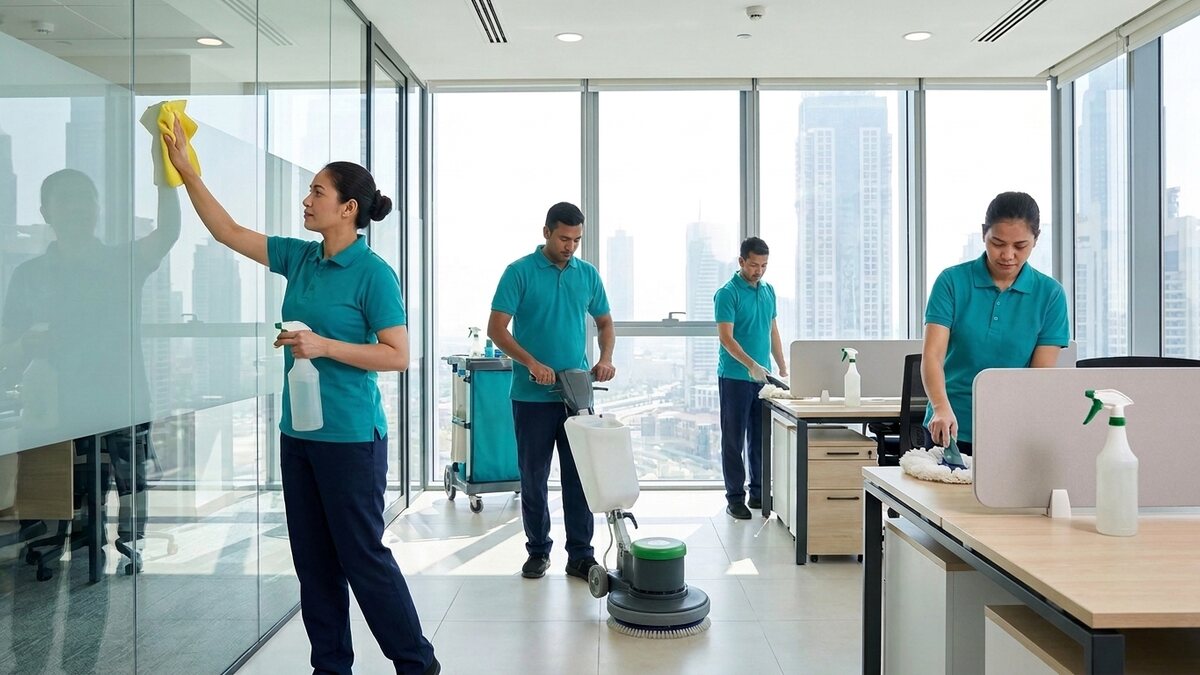
The way a business manages clean workplace productivity affects safety, continuity, service quality and the experience of everyone who enters a property. A clear plan for clean workplace productivity can reduce avoidable disruption, improve accountability and give managers better information for daily decisions. A clean workplace supports presentation, comfort, asset care and reliable daily operations. In Dubai, dust, high footfall and air-conditioned interiors make frequency, method and inspection standards especially important. This guide focuses on business benefits and gives property owners, facilities teams and decision-makers a structured way to move from a broad requirement to a workable plan.
Before approving the final method, check that it reflects current UAE requirements, landlord rules, manufacturer guidance and advice from qualified specialists.
Why this topic deserves a site-specific plan
Operational detail determines whether the plan works at this particular property. The operating environment should drive the plan: who is present, what can change quickly, which failures matter and how managers want those failures reported.
For day-to-day reliability, begin by writing a short outcome statement: what should be protected or improved, who owns the decision, what evidence will demonstrate success, and what must happen when the normal process fails. This keeps discussions about clean workplace productivity focused on results instead of isolated features.
Key risks and planning questions
A useful review should consider at least the following exposure points:
- High-touch points missed between general cleans: Define the trigger, responsible person, immediate control and escalation evidence.
- Chemicals used on incompatible surfaces: Define the trigger, responsible person, immediate control and escalation evidence.
- Cleaning work disrupting employees or customers: Define the trigger, responsible person, immediate control and escalation evidence.
- Consumables running out unexpectedly: Define the trigger, responsible person, immediate control and escalation evidence.
- Wet floors and equipment creating safety hazards: Define the trigger, responsible person, immediate control and escalation evidence.
- Hidden areas accumulating dust and debris: Define the trigger, responsible person, immediate control and escalation evidence.
Look for dependencies between the findings. The practical test is whether staff can detect, communicate and control the situation under realistic operating pressure.
A practical business benefits framework
- Zone the facility by use, traffic and hygiene priority. Assign every action to a role, set when it occurs and state what proves completion. Those details make supervision and improvement possible.
- Define task frequencies instead of relying on broad descriptions. A tabletop review is not enough; observe the process at normal and busy times so queues, handovers and response limits become visible.
- Match products and tools to each material. Tell staff what to do when the standard step cannot continue. The instruction should name the escalation contact and the limits of frontline authority.
- Schedule disruptive tasks outside peak activity. Keep documentation practical: enough to reconstruct the event and monitor patterns, but short enough for consistent frontline use.
- Use colour-coded tools and safe chemical controls. Invite every team that supplies information or receives the outcome. Cross-functional review identifies gaps that one department cannot see alone.
- Set inspection points and objective acceptance criteria. Use both time-based and event-based reviews. A serious incident or material site change should prompt reassessment before the normal date.
- Track consumables and recurring defects. Begin with evidence of current practice. Watch the task at different times and ask affected teams where exceptions or delays usually appear.
Implementation details that improve reliability
Define roles before selecting tools
Responsibility should follow the complete lifecycle: delivery, monitoring, exception handling, correction and management acceptance.
Design for busy periods and exceptions
Design around variation rather than an average day. The plan should remain usable during surges, absences and competing priorities.
Use clear instructions and short checklists
Keep operational prompts short and action-oriented. Longer policy material can explain why, but it should not slow an urgent decision.
Supervise outcomes, not just attendance
Attendance alone does not prove quality. Supervisors need to observe the work, sample records, test understanding and give prompt coaching against a clear standard.
Performance measures to track
Choose a small dashboard that combines completion, quality and response. Useful measures for this topic include:
- Planned tasks completed: define its data source, owner, review cycle, target and investigation threshold.
- Safety observations: define its data source, owner, review cycle, target and investigation threshold.
- Inspection pass rate: define its data source, owner, review cycle, target and investigation threshold.
- Repeat cleaning defects: define its data source, owner, review cycle, target and investigation threshold.
- Complaint closure time: define its data source, owner, review cycle, target and investigation threshold.
Balance leading measures, such as checks completed, with outcome measures, such as defects or incidents. Either view alone can mislead.
Common mistakes to avoid
- Failing to protect sensitive surfaces. Replace this with a documented decision, clear ownership and a review point.
- Adding tasks informally without updating the scope. Replace this with a documented decision, clear ownership and a review point.
- Choosing a provider only on headcount and price. Replace this with a documented decision, clear ownership and a review point.
- Using one schedule for every area. Replace this with a documented decision, clear ownership and a review point.
Treat implementation as a controlled change process. Communicate the reason, brief affected teams, test the result and update documents only after the method is proven.
How to evaluate a service provider
A clean workplace productivity proposal should show how the bidder studies the site, mobilises resources, supervises delivery and reports results. Request verifiable evidence.
- A site-specific scope and frequency plan, and test the claim during clarification, mobilisation and the first quality review.
- Trained cleaners and active supervision, and test the claim during clarification, mobilisation and the first quality review.
- Safe product and equipment controls, and test the claim during clarification, mobilisation and the first quality review.
- Transparent inspection records, and test the claim during clarification, mobilisation and the first quality review.
- Reliable relief staffing, and test the claim during clarification, mobilisation and the first quality review.
Ask every bidder to identify exclusions and dependencies. Clarify mobilisation, supervision, response, reporting and the cost of foreseeable changes before award.
Frequently asked questions
What is the best first step?
Complete a site walkthrough with the people who operate the current process. Confirm the desired outcome, identify the most important gaps and agree one measurable improvement with an owner and review date.
How often should clean workplace productivity be reviewed?
Review it at planned intervals and whenever an incident, refurbishment, occupancy change, new activity, technology change or repeated quality issue alters the original assumptions. High-risk controls should be checked more frequently than stable low-risk tasks.
What should be documented for clean workplace productivity?
Keep the approved scope, responsibilities, site instructions, training or briefing records, inspection results, incident or defect records, corrective actions and management decisions. Documentation should support action and learning rather than exist only for filing.
How can a business control cost without reducing quality?
Prioritise the highest risks and service outcomes, remove duplicated activity, schedule work around real demand, use technology where it improves decisions, and measure recurring defects. A clear scope reduces contingency pricing and prevents uncontrolled additions.
Next steps
How Professional Cleaning Supports Workplace Productivity is most effective when it becomes part of routine management rather than a one-off exercise. Start with the operating outcome, observe the site, assign owners, test the process and use evidence to improve it. For support with planning and service delivery in Dubai, explore Ocean Growth Security services or contact the team for a site-specific discussion.