


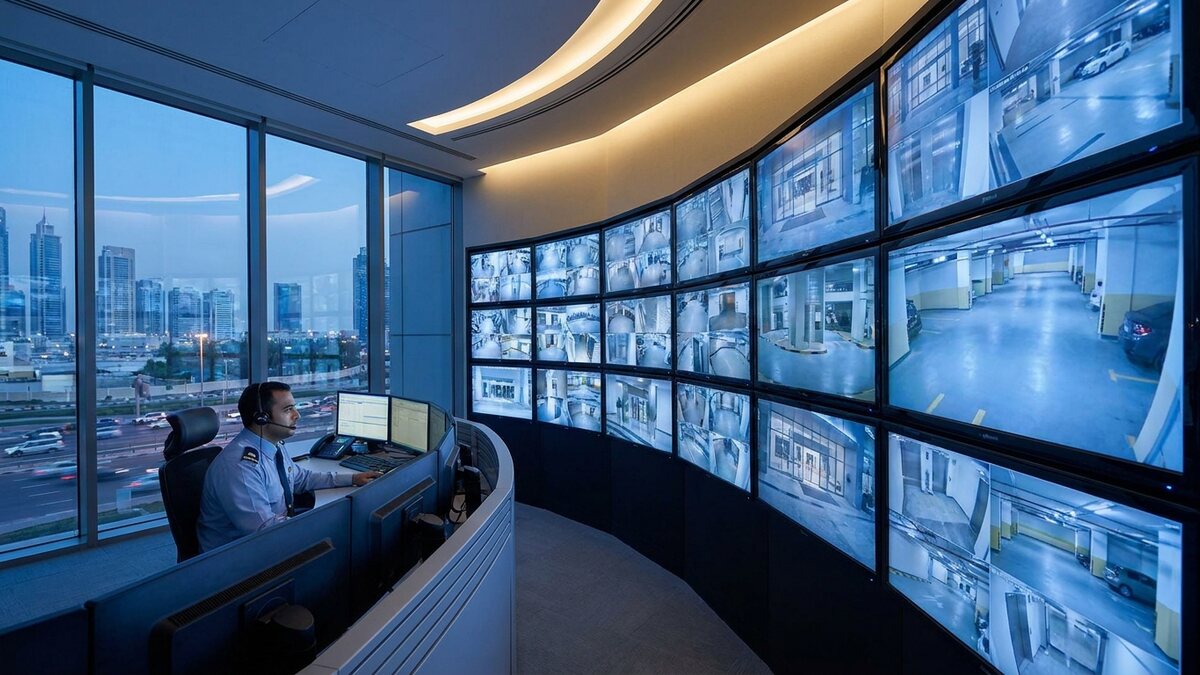
The way a business manages CCTV and security guards affects safety, continuity, service quality and the experience of everyone who enters a property. The best results from CCTV and security guards come from matching the scope to real operating conditions, then checking performance with evidence. Electronic security is most effective when cameras, access control and human response are designed as one operating system. Technology should help people verify events, make decisions and preserve useful records—not simply create more screens and alerts. This guide focuses on integrated security and gives property owners, facilities teams and decision-makers a structured way to move from a broad requirement to a workable plan.
Adapt this framework to the actual site. Before implementation, verify permits, approvals, technical standards and contractual duties that apply to the work.
Why this topic deserves a site-specific plan
Operational detail determines whether the plan works at this particular property. The final arrangement should mirror real journeys, working hours, sensitive areas and communication paths rather than assumptions made from a desk.
From a management perspective, begin by writing a short outcome statement: what should be protected or improved, who owns the decision, what evidence will demonstrate success, and what must happen when the normal process fails. This keeps discussions about CCTV and security guards focused on results instead of isolated features.
Key risks and planning questions
A useful review should consider at least the following exposure points:
- Equipment failures discovered only after an incident: Consider peak conditions, available resources, escalation limits and corrective follow-up.
- Unsecured network access to security devices: Consider peak conditions, available resources, escalation limits and corrective follow-up.
- Privacy expectations not reflected in camera placement: Consider peak conditions, available resources, escalation limits and corrective follow-up.
- Camera blind spots at decision points: Consider peak conditions, available resources, escalation limits and corrective follow-up.
- Poor lighting that reduces usable images: Consider peak conditions, available resources, escalation limits and corrective follow-up.
- Shared access cards and weak visitor records: Consider peak conditions, available resources, escalation limits and corrective follow-up.
Group related issues into credible scenarios. This helps managers see where one improvement can reduce several risks and where a single failure could defeat multiple controls.
A practical integrated security framework
- Place cameras to identify activity rather than only observe space. Test the method in both routine and pressured conditions. Peak activity or reduced staffing often exposes delays hidden during a quiet walkthrough.
- Assign access rights by role and review them regularly. Tell staff what to do when the standard step cannot continue. The instruction should name the escalation contact and the limits of frontline authority.
- Document who monitors alerts and what action follows. Balance evidence with usability. A short accurate record is more valuable than a detailed form that staff routinely bypass.
- Test playback, export and timestamp accuracy. Review the result across departmental boundaries because security, reception, facilities, cleaning, IT and events often share the same handoffs.
- Schedule cleaning, firmware and health checks. Use both time-based and event-based reviews. A serious incident or material site change should prompt reassessment before the normal date.
- Train operators with realistic scenarios and escalation steps. Map today’s process before redesigning it. Frontline staff and service users can reveal delays and workarounds that the procedure does not show.
- Define the event or decision each device must support. Turn the requirement into an accountable task with an owner, timing and completion record. Ambiguous controls are rarely delivered consistently.
Implementation details that improve reliability
Design for busy periods and exceptions
Include predictable pressure points in the design: opening, closing, handovers, contractor access, holidays and unusual occupancy.
Use clear instructions and short checklists
Version-control important checklists and confirm old copies are removed. Conflicting instructions can undermine an otherwise sound process.
Supervise outcomes, not just attendance
Measure what the service produced, not only whether someone attended. Sample different times and locations so the review reflects normal variation.
Define roles before selecting tools
Avoid buying tools to solve an undefined problem. First agree the process, responsible roles, evidence and management decision points.
Performance measures to track
Choose a small dashboard that combines completion, quality and response. Useful measures for this topic include:
- Critical views available: agree the reporting period, acceptable range and response to an adverse trend.
- Alarm acknowledgement time: agree the reporting period, acceptable range and response to an adverse trend.
- Invalid access attempts reviewed: agree the reporting period, acceptable range and response to an adverse trend.
- Visitor records completed: agree the reporting period, acceptable range and response to an adverse trend.
- Preventive maintenance completion: agree the reporting period, acceptable range and response to an adverse trend.
Quality, timeliness and reliability should be read as a set. Improvement in one measure should not create hidden deterioration in another.
Common mistakes to avoid
- Keeping video without a clear purpose or review process. Replace this with a documented decision, clear ownership and a review point.
- Choosing cameras only by resolution. Replace this with a documented decision, clear ownership and a review point.
- Installing devices before defining response procedures. Replace this with a documented decision, clear ownership and a review point.
- Giving permanent access when temporary access is enough. Replace this with a documented decision, clear ownership and a review point.
Avoid changing everything at the same time. Establish a baseline, implement the highest-value improvement first and check the result before widening the programme.
How to evaluate a service provider
For CCTV and security guards, look beyond a company profile. The submission should describe mobilisation, competent resources, quality control and practical reporting.
- Operator training and handover documents, with a document, reference, demonstration or mobilisation action that can be verified.
- Maintenance response commitments, with a document, reference, demonstration or mobilisation action that can be verified.
- Clear warranty and lifecycle planning, with a document, reference, demonstration or mobilisation action that can be verified.
- Documented system design and coverage logic, with a document, reference, demonstration or mobilisation action that can be verified.
- Compatible, supportable equipment, with a document, reference, demonstration or mobilisation action that can be verified.
Select for dependable value, not the smallest initial number. Service failures, rework and weak documentation can quickly exceed an apparent tender saving.
Frequently asked questions
How can a business control cost without reducing quality?
Prioritise the highest risks and service outcomes, remove duplicated activity, schedule work around real demand, use technology where it improves decisions, and measure recurring defects. A clear scope reduces contingency pricing and prevents uncontrolled additions.
Who should own the plan?
A named manager should own the outcome, while operational supervisors manage daily delivery. Departments affected by the process should contribute to design and review so that handovers and dependencies are not overlooked.
What is the best first step?
Complete a site walkthrough with the people who operate the current process. Confirm the desired outcome, identify the most important gaps and agree one measurable improvement with an owner and review date.
How often should CCTV and security guards be reviewed?
Review it at planned intervals and whenever an incident, refurbishment, occupancy change, new activity, technology change or repeated quality issue alters the original assumptions. High-risk controls should be checked more frequently than stable low-risk tasks.
Next steps
How CCTV and Security Guards Work Better Together is most effective when it becomes part of routine management rather than a one-off exercise. Start with the operating outcome, observe the site, assign owners, test the process and use evidence to improve it. For support with planning and service delivery in Dubai, explore Ocean Growth Security services or contact the team for a site-specific discussion.
Where the screens are watched by a dedicated operator rather than a guard at a post, the staffing model is a different one — see CCTV operators in Dubai.