


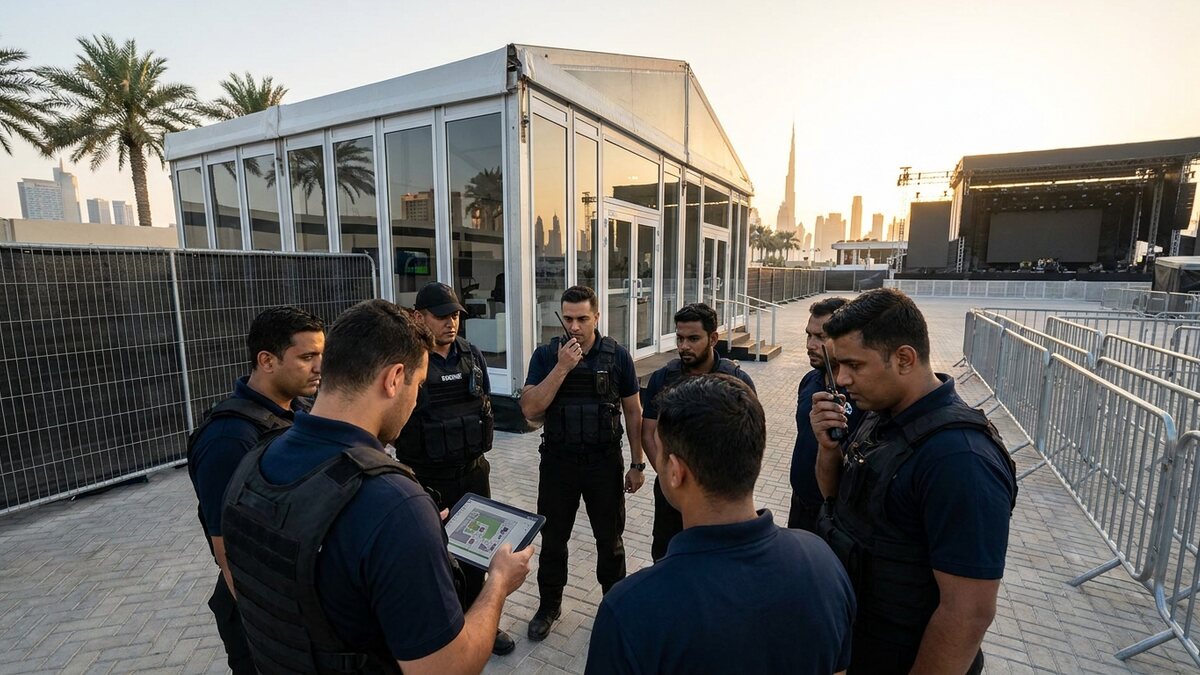
The way a business manages event security planning Dubai affects safety, continuity, service quality and the experience of everyone who enters a property. For organisations that want dependable results, event security planning Dubai should be approached as an operating system rather than a one-time purchase. An event concentrates people, suppliers, temporary infrastructure and tight deadlines in one place. Good event security supports the guest experience by making arrival, movement and response feel organised, while remaining ready for medical, fire, crowd or access incidents. This guide focuses on planning guide and gives property owners, facilities teams and decision-makers a structured way to move from a broad requirement to a workable plan.
Use these recommendations to organise the discussion, then obtain property-specific advice on approvals, standards and legal responsibilities before work begins.
Why this topic deserves a site-specific plan
Operational detail determines whether the plan works at this particular property. Generic requirements frequently understate handovers, contractor activity, after-hours exposure and the operational consequences of delayed escalation.
In practical terms, begin by writing a short outcome statement: what should be protected or improved, who owns the decision, what evidence will demonstrate success, and what must happen when the normal process fails. This keeps discussions about event security planning Dubai focused on results instead of isolated features.
Key risks and planning questions
A useful review should consider at least the following exposure points:
- VIP zones without clear boundaries: Define the trigger, responsible person, immediate control and escalation evidence.
- Lost children or vulnerable guests: Define the trigger, responsible person, immediate control and escalation evidence.
- Weather and heat affecting outdoor operations: Define the trigger, responsible person, immediate control and escalation evidence.
- Slow communication between security and event control: Define the trigger, responsible person, immediate control and escalation evidence.
- Queues extending into unsafe areas: Define the trigger, responsible person, immediate control and escalation evidence.
- Credentials that are easy to share or misunderstand: Define the trigger, responsible person, immediate control and escalation evidence.
Avoid rating each issue as though it exists alone. Timing, occupancy, asset value and weak escalation can multiply the consequence, so document and challenge the assumptions behind every rating.
A practical planning guide framework
- Define attendance, audience profile and venue limitations. Do not leave the plan open-ended. Set a calendar review plus change triggers that require the assumptions to be checked again.
- Complete a joint walkthrough with venue and production leads. Create a baseline from observation, records and staff interviews. Compare the documented process with what actually happens during a normal shift.
- Calculate staffing by role, zone and operating period. Attach ownership and a reviewable record to the task. If no one can show when it happened, the control cannot be managed reliably.
- Design separate routes for guests, VIPs, staff and deliveries. Test the method in both routine and pressured conditions. Peak activity or reduced staffing often exposes delays hidden during a quiet walkthrough.
- Brief screening standards and prohibited-item procedures. Tell staff what to do when the standard step cannot continue. The instruction should name the escalation contact and the limits of frontline authority.
- Create an event control communications structure. Keep documentation practical: enough to reconstruct the event and monitor patterns, but short enough for consistent frontline use.
- Prepare emergency actions and decision authority. Review the result across departmental boundaries because security, reception, facilities, cleaning, IT and events often share the same handoffs.
Implementation details that improve reliability
Define roles before selecting tools
For event security planning Dubai, map who performs, who verifies and who approves. This simple separation helps prevent defects and alarms from being noticed but ignored.
Design for busy periods and exceptions
Design around variation rather than an average day. The plan should remain usable during surges, absences and competing priorities.
Use clear instructions and short checklists
Treat checklists as memory support, not a substitute for competence. Train the reasoning behind critical decisions and practise escalation.
Supervise outcomes, not just attendance
Supervisors add value by detecting patterns, not merely isolated errors. Compare observations with records and target coaching at recurring causes.
Performance measures to track
Choose a small dashboard that combines completion, quality and response. Useful measures for this topic include:
- Credential exceptions: make the measure auditable and pair it with a quality check.
- Incidents per attendance band: make the measure auditable and pair it with a quality check.
- Radio response time: make the measure auditable and pair it with a quality check.
- Post-event corrective actions: make the measure auditable and pair it with a quality check.
- Entry processing time: make the measure auditable and pair it with a quality check.
A dashboard should prompt questions, not replace judgement. Pair numerical results with site inspections and conversations with affected teams.
Common mistakes to avoid
- Estimating staff only from total attendance. Replace this with a documented decision, clear ownership and a review point.
- Briefing teams after guests begin arriving. Replace this with a documented decision, clear ownership and a review point.
- Placing barriers without testing pedestrian flow. Replace this with a documented decision, clear ownership and a review point.
- Mixing delivery and guest access. Replace this with a documented decision, clear ownership and a review point.
Implement urgent corrections immediately, but manage broader changes through planned stages. Each stage should have acceptance criteria and a decision to continue.
How to evaluate a service provider
Require a practical delivery model for event security planning Dubai, not only a list of services. It should cover startup, routine control, escalation and improvement.
- Experience with similar event formats, backed by records from comparable work or a clear pre-start deliverable.
- Clear command and supervisor ratios, backed by records from comparable work or a clear pre-start deliverable.
- Trained access and crowd-management staff, backed by records from comparable work or a clear pre-start deliverable.
- Coordination with venue and emergency teams, backed by records from comparable work or a clear pre-start deliverable.
- Documented briefing and deployment plans, backed by records from comparable work or a clear pre-start deliverable.
Test proposals with realistic scenarios and ask who would act, within what time and with what authority. Practical answers are more useful than generic promises.
Frequently asked questions
How often should event security planning Dubai be reviewed?
Review it at planned intervals and whenever an incident, refurbishment, occupancy change, new activity, technology change or repeated quality issue alters the original assumptions. High-risk controls should be checked more frequently than stable low-risk tasks.
What should be documented for event security planning Dubai?
Keep the approved scope, responsibilities, site instructions, training or briefing records, inspection results, incident or defect records, corrective actions and management decisions. Documentation should support action and learning rather than exist only for filing.
How can a business control cost without reducing quality?
Prioritise the highest risks and service outcomes, remove duplicated activity, schedule work around real demand, use technology where it improves decisions, and measure recurring defects. A clear scope reduces contingency pricing and prevents uncontrolled additions.
Who should own the plan?
A named manager should own the outcome, while operational supervisors manage daily delivery. Departments affected by the process should contribute to design and review so that handovers and dependencies are not overlooked.
Next steps
Event Security Planning in Dubai: From Risk Assessment to Closeout is most effective when it becomes part of routine management rather than a one-off exercise. Start with the operating outcome, observe the site, assign owners, test the process and use evidence to improve it. For support with planning and service delivery in Dubai, explore Ocean Growth Security services or contact the team for a site-specific discussion.