


Choosing the right all-purpose cleaner for your kitchen is about more than finding a bottle that smells fresh. A good product should remove grease, handle everyday spills, suit your surfaces, and support the level of hygiene your household needs. This guide walks through what to look for in an antibacterial kitchen cleaner, when to choose a gentler formula, and how to compare sprays, concentrates, natural options, and familiar branded cleaners.
What should an all-purpose kitchen cleaner actually do?
An effective kitchen cleaner should lift food residue, oil, fingerprints, and sticky grime without leaving a film behind. If it is marketed as a disinfectant kitchen spray, it should also include clear directions for disinfecting, including how long the surface must stay wet and whether rinsing is needed afterward.
The best choice depends on how you clean. For a quick wipe after breakfast, a mild kitchen surface spray may be enough. For stovetop splatter, cabinet handles, trash-area messes, or raw-food prep zones, you may need a stronger grease remover spray or a labeled antibacterial formula.

Cleaning, sanitizing, and disinfecting are not the same
Many shoppers use these words interchangeably, but they mean different things in practice. Cleaning removes visible dirt, grease, and residue. Sanitizing reduces certain bacteria to a safer level. Disinfecting goes further and is designed to kill listed germs when used exactly as directed.
Before buying a kitchen spray cleaner, check the label for the job you expect it to perform. A pleasant-smelling natural kitchen cleaner may be excellent for daily wiping, but it may not disinfect unless the product is specifically formulated and labeled for that purpose.
Use this quick decision filter:
- For crumbs, coffee rings, and light spills: choose a mild multi-surface cleaner or everyday kitchen counter cleaner spray.
- For greasy stovetops and backsplashes: look for a degreasing formula or lysol pro kitchen spray cleaner and degreaser style product.
- For high-touch areas: choose an antibacterial kitchen cleaner or disinfecting spray with clear contact-time instructions.
- For frequent, low-odor cleaning: consider an eco-friendly spray, homemade cleaner spray, or low-residue option if it matches the mess.
- For delicate surfaces: confirm compatibility before spraying stone, wood, painted cabinets, stainless steel, or sealed finishes.
Ingredients and pH matter more than marketing words
A kitchen cleaner does not need to be harsh to be useful, but its formula should match the soil you are trying to remove. Grease is organic grime, so slightly alkaline cleaners often perform better on oily buildup than very acidic formulas. Near-neutral sprays can be better for frequent wiping because they are usually less aggressive on surfaces and easier to use around busy households.
Labels can also help you spot safer, more transparent options. Look for clear ingredient information, surface warnings, ventilation guidance, and whether gloves are recommended. Certifications or third-party safety programs can be helpful, but they should not replace reading the use directions.
Common product types include:
- Plant-based or natural formulas: Often appealing for daily cleaning and lower fragrance preferences. A natural kitchen cleaner can be a practical choice for counters, tables, and appliance fronts when disinfecting is not required.
- Synthetic antibacterial sprays: Useful when you need labeled germ-killing performance. Products such as lysol kitchen cleaner spray or lysol kitchen pro antibacterial kitchen cleaner spray are examples of branded options shoppers may compare for antibacterial use.
- Electrolyzed water formulas: An electrolyzed ion kitchen cleaner spray may appeal to people who want a simple, low-residue cleaner, though label claims and use instructions still matter.
- DIY cleaners: A homemade cleaner spray can work for light wiping, but it should not be assumed to disinfect unless the ingredients and method are proven for that use.
Is a multi-surface cleaner enough for the kitchen?
A multi-surface cleaner is enough for many everyday kitchen jobs, especially if you are wiping sealed counters, appliance exteriors, tables, and cabinet fronts. It is usually designed to be versatile and gentle, which helps reduce streaks or surface damage during frequent use.
However, “multi-surface” does not automatically mean “heavy-duty.” If your main issue is oily residue near the stove, choose a formula that specifically mentions grease removal. If your concern is germs on high-touch areas, choose a labeled antibacterial or disinfecting product and follow the wet-contact time.
Think of it this way: multi-surface sprays are for range, while all-purpose sprays are often for strength. Some products overlap, but the label should tell you where they belong in your routine.
Match the spray to the surface
One cleaner rarely performs perfectly on every material. A strong spray that cuts grease on a range hood may be too aggressive for unsealed stone or certain painted finishes. A gentle eco-friendly spray may look beautiful on appliance fronts but struggle with baked-on residue.
For better results, match the product to the area:
- Counters: Use a kitchen counter cleaner spray that is safe for your counter material. Rinse food-prep surfaces if the label requires it.
- Stovetops and backsplashes: Choose a grease remover spray or degreasing kitchen cleaner spray for oily films.
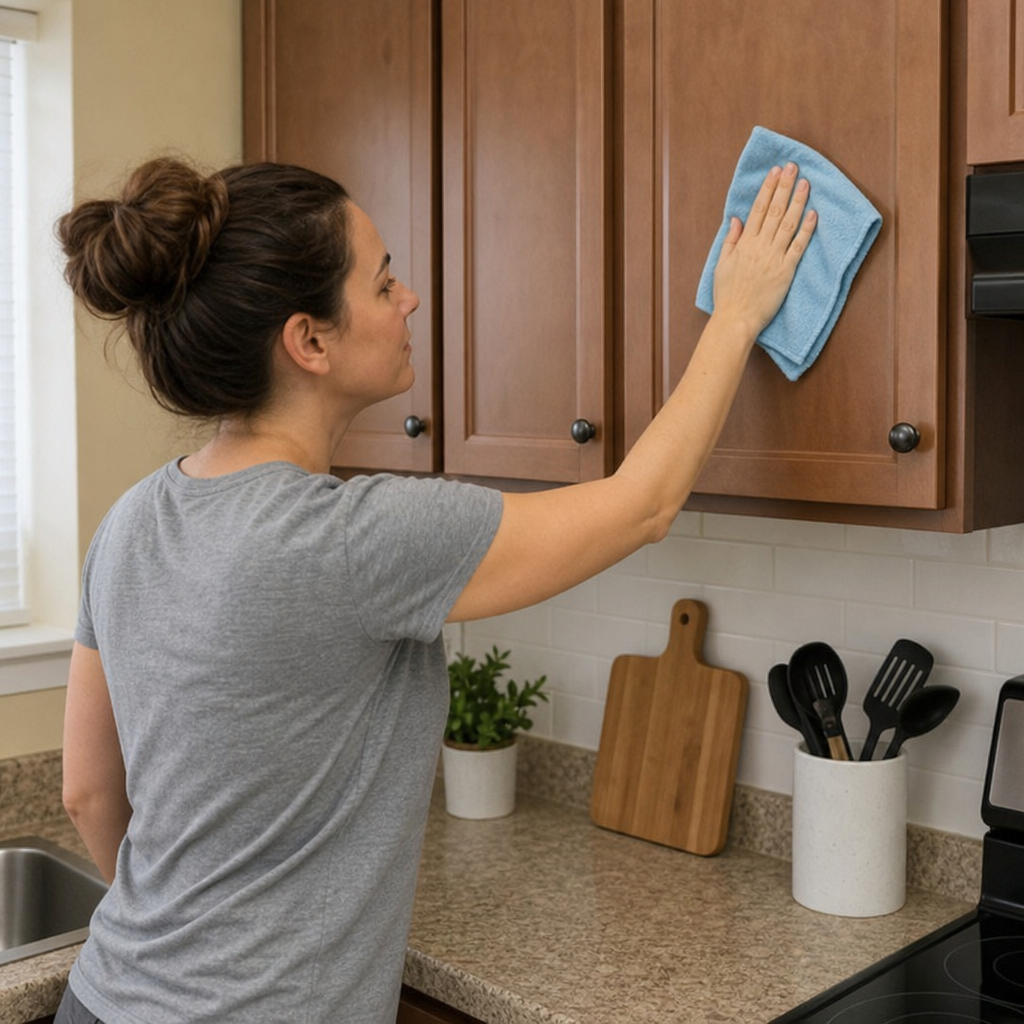
- Cabinets: Use a kitchen cabinets cleaner spray that will not dull paint, soften finishes, or leave sticky residue around handles.
- Appliance exteriors: Choose a low-streak formula and wipe with a clean microfiber cloth.
- Sinks and trash areas: Consider an antibacterial kitchen cleaner when odor, bacteria, and frequent contact are concerns.
Residue can make a clean kitchen feel dirty
A cleaner that leaves a sticky or cloudy layer can attract dust, smear under light, and make surfaces feel less hygienic. Residue is especially frustrating on black appliances, glossy counters, glass, stainless steel, and cabinet doors. It can also interfere with the fresh, finished look people expect after cleaning.
To reduce residue, use less product than you think you need, wipe with a clean damp cloth when appropriate, and dry shiny surfaces with microfiber. For food-contact areas, always follow label instructions about rinsing. Free-rinsing formulas can be helpful when you clean often and do not want buildup.
Branded, natural, and homemade options all have a place
There is no single best cleaner for every kitchen. A household with small children may prioritize fragrance level and simple ingredients. A frequent home cook may care more about grease-cutting power. Someone cleaning after raw meat prep may want a true disinfectant kitchen spray with clear antibacterial directions.
A branded product such as lysol kitchen cleaner spray, lysol kitchen pro antibacterial kitchen cleaner spray, or lysol pro kitchen spray cleaner and degreaser may be worth considering when you want a familiar disinfecting or degreasing option. A homemade cleaner spray may be fine for light daily messes, especially on surfaces that do not need disinfecting. An eco-friendly spray or electrolyzed ion kitchen cleaner spray may suit routine maintenance when you prefer a lower-residue or ingredient-conscious approach.
The key is not choosing the most powerful bottle by default. It is choosing the safest effective product for the surface, soil, and hygiene need in front of you.
A simple checklist before you buy
Before adding a new kitchen cleaner spray to your cart, ask:
- Does it clean grease, disinfect, or both?
- Is it safe for my counters, cabinets, appliances, and sealed surfaces?
- Does the label mention rinsing for food-contact areas?
- Are the ingredients, warnings, and use directions easy to understand?
- Will the scent, residue level, and required ventilation work for daily use?
- Do I need one everyday kitchen surface spray and one stronger antibacterial product instead of expecting one bottle to do everything?
The practical takeaway
The best all-purpose kitchen cleaner is the one that fits your real cleaning routine. Use a gentle spray for everyday wiping, a degreaser for oily messes, and a properly labeled antibacterial or disinfecting cleaner when hygiene matters most. Read the label, respect surface limits, and choose formulas that leave your kitchen not only looking clean, but feeling safe and easy to maintain.
